Features
Six systems. One record underneath all of them.
The reason these belong together isn't convenience. It's that the answers you actually want — did that job make money, which rep runs the process, what is the backlog worth today — can only be computed by something that sees the sale and the cost at once.
01 · In-home sales
The appointment, run the same way by everyone.
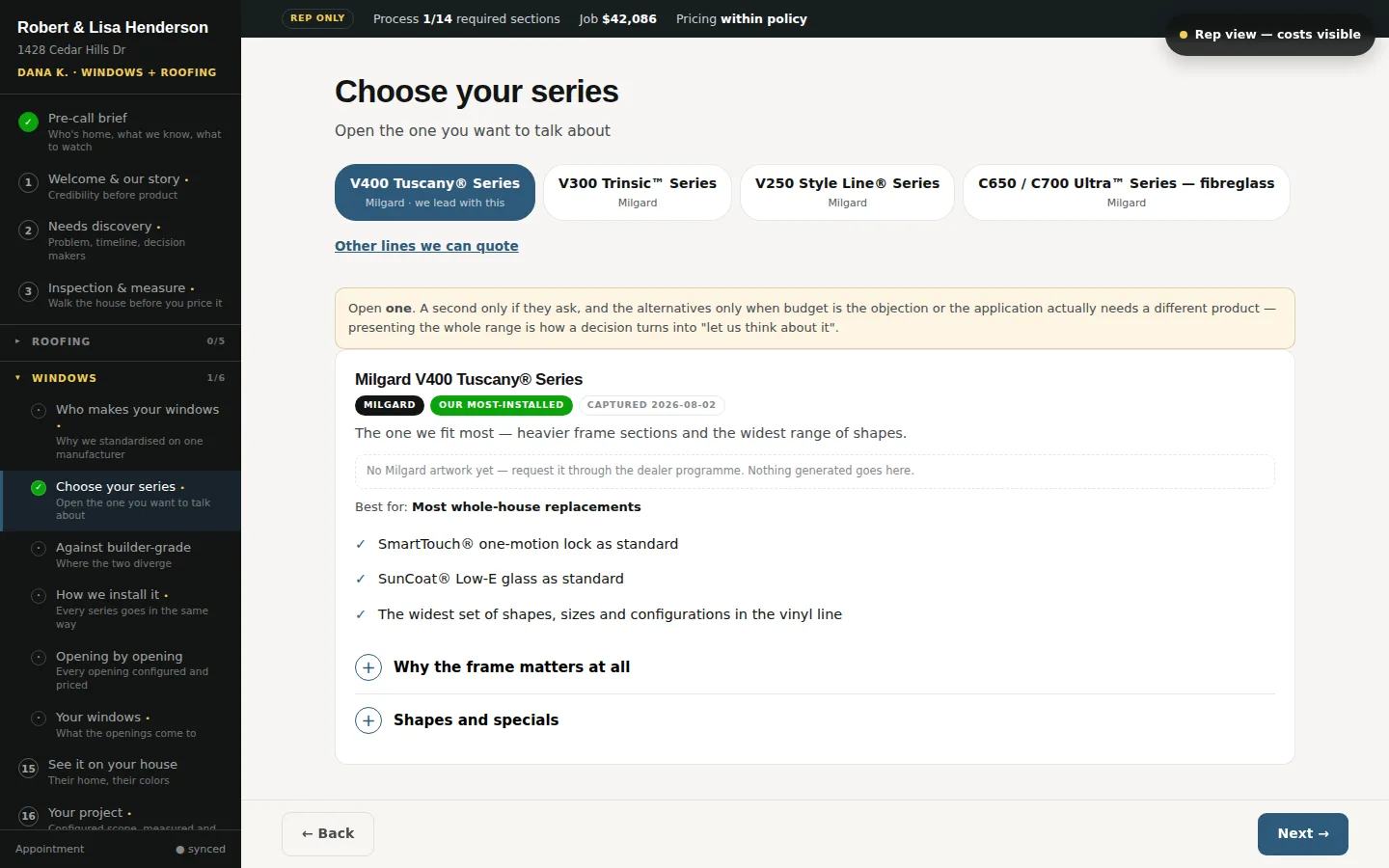
A guided fourteen-section call with the product story authored once, five trade configurators behind it, and the close — price, financing, signature — on the same screen that measured the house.
- Windows, doors, siding, roofing and skylights, each configured against real manufacturer price books.
- Aerial measurement from the address, so the roof on screen is the roof you're selling.
- Good/Better/Best re-costed from one takeoff, and a homeowner view that strips every cost figure.
- Seven-lender financing cascade with a real approval before the rep leaves the kitchen.
02 · CRM & pipeline
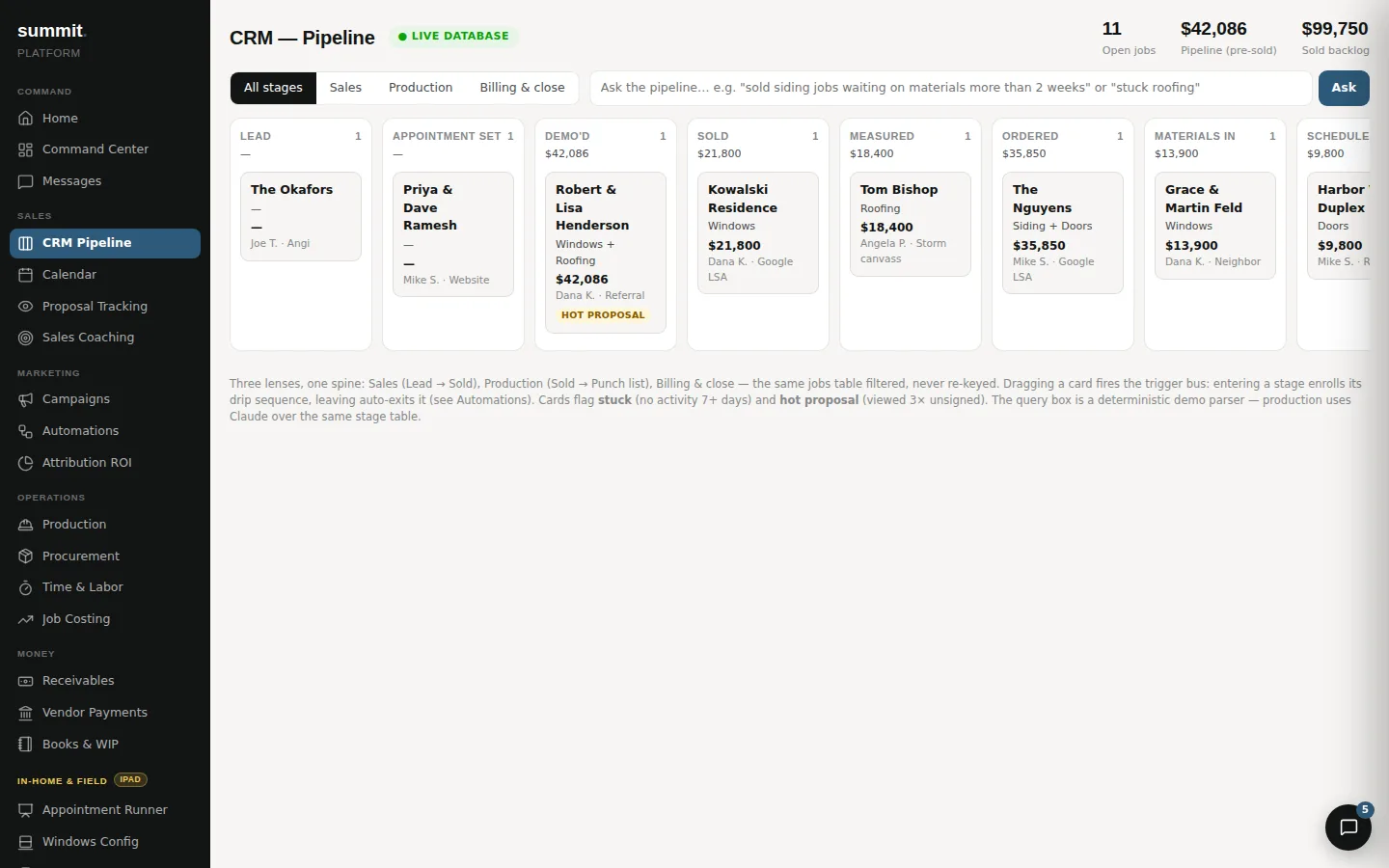
Twelve stages, dollars at every one.
Lead to closed on one board, with three lenses over the same jobs — sales, production, billing — so the office and the field are never looking at different copies.
- Ask it in plain English — "sold siding jobs waiting on materials more than two weeks" — instead of building a report.
- Cards flag themselves: stuck after seven quiet days, hot when a proposal is read three times unsigned.
- Appointments, canvassing and proposal tracking on the same record, not bolted alongside it.
- A migration engine that imports from whatever you're running now, so the switch isn't a data-entry project.
03 · Marketing engine
Campaigns that fire off the pipeline, not off a list.
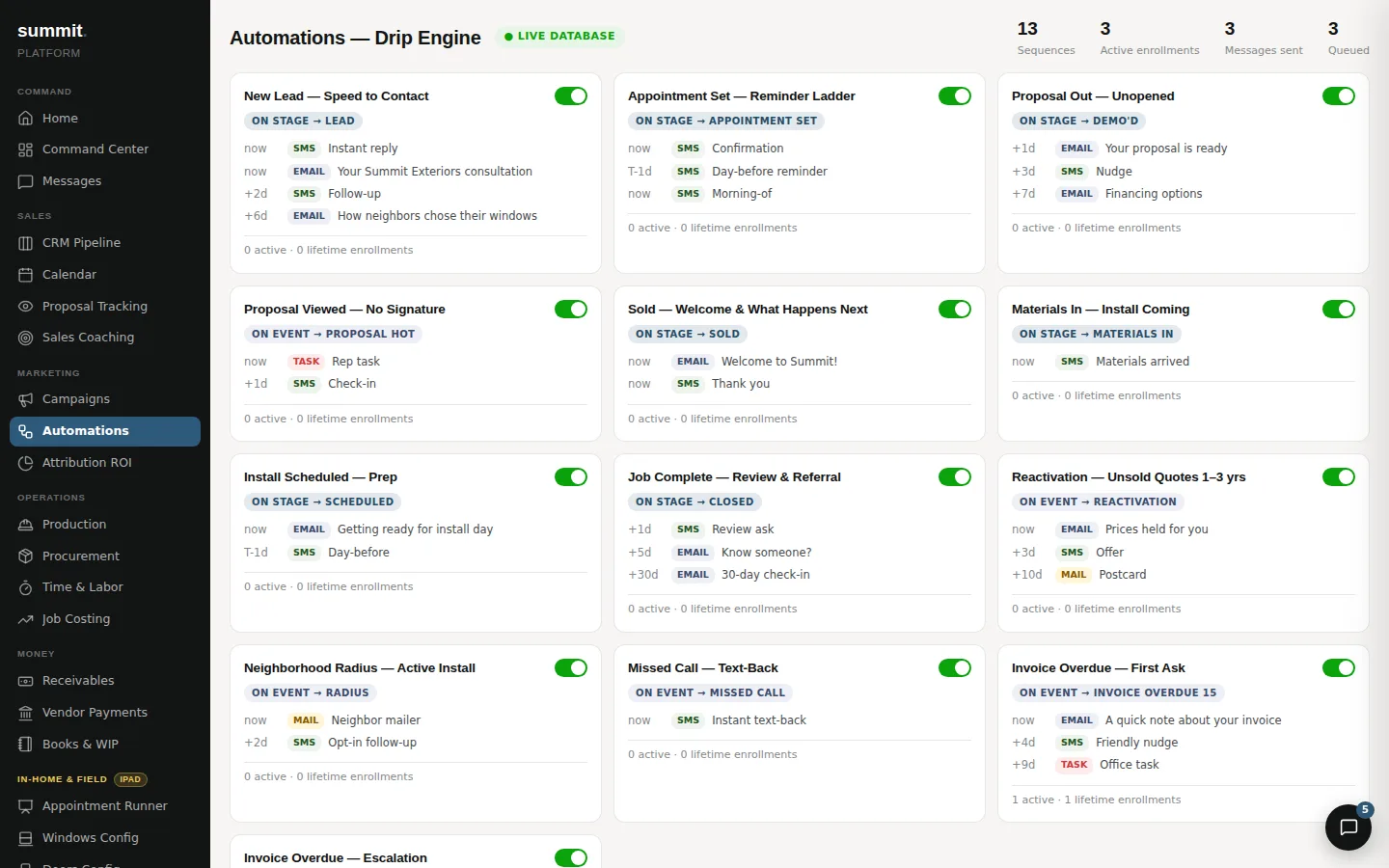
Moving a card is the marketing trigger. Nothing is exported, nothing is maintained by hand, and a lead never sits waiting for someone to remember it.
- Thirteen sequences covering speed-to-lead, appointment reminders, unsigned proposals, post-install reviews and referrals.
- Reactivation of dead quotes from one to three years back — the cheapest appointment you can book is one you already paid for.
- Missed-call text-back, so a call you couldn't answer isn't a lead your competitor gets.
- Attribution by source against real closed dollars, not clicks.
04 · Production & procurement
The half of the job that happens after the signature.
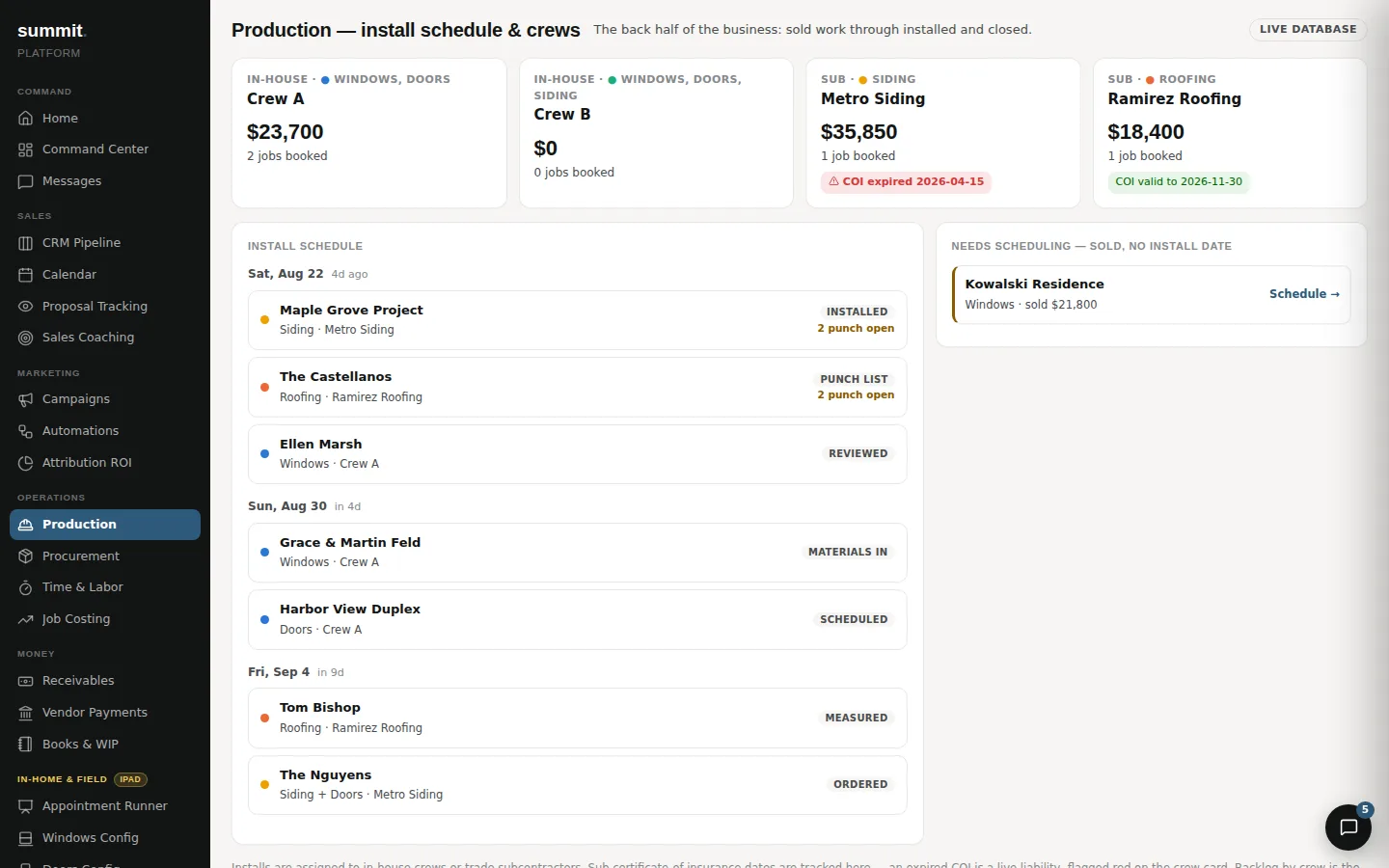
Most software for this trade stops at sold, which is exactly where the margin starts moving. Measure, order, materials, schedule, install, punch — on the same job record the rep configured.
- Purchase orders built from the takeoff, so what you order is what you sold.
- Vendor payments with fraud controls — a banking change is scored, held, and verified against the number already on file, never the one in the email.
- Crew scheduling and punch lists with photos against the job.
- Stalled jobs surface here, rather than in a phone call from the customer.
05 · Job money
Did we actually make money on that job?
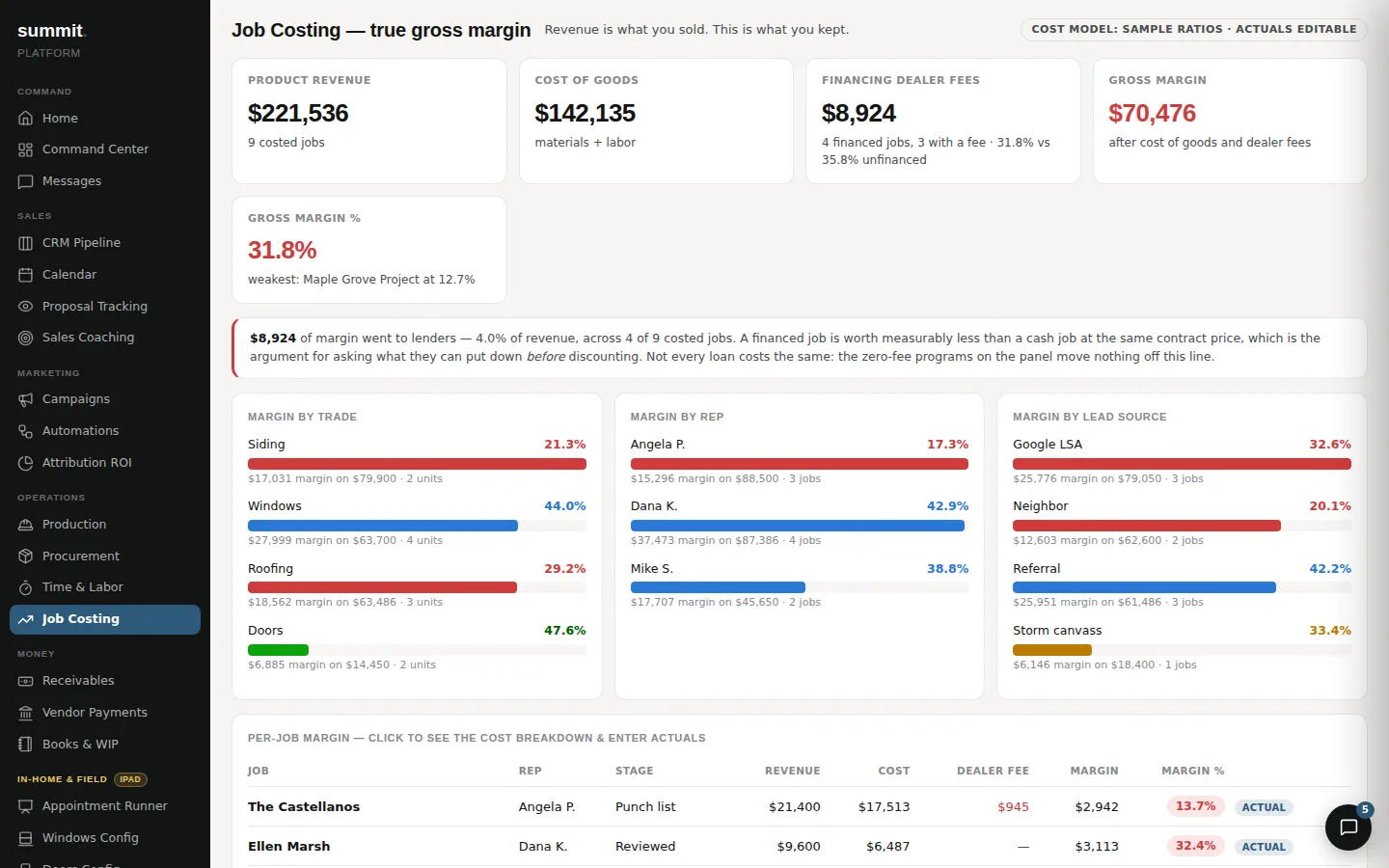
The question every owner asks and most systems answer with a guess, because they can see the invoice and not the cost. This one sees both.
- True margin per job with the financing dealer fee subtracted — the cost nobody else puts on the job.
- Billing that happens by itself: signing lays out the schedule, reaching a stage issues the invoice, and deposits are held through the rescission window.
- Burdened crew labour — hours approved at a rate loaded with payroll tax, workers' comp and liability, landing on the job.
- A WIP schedule on a double-entry journal that checks its own books and says so when they don't balance.
06 · Command & control
Who can see what, and what happened.
A platform holding homeowner details, credit applications and job margin has to be able to answer for itself. This is the part most vertical software leaves until after the first incident.
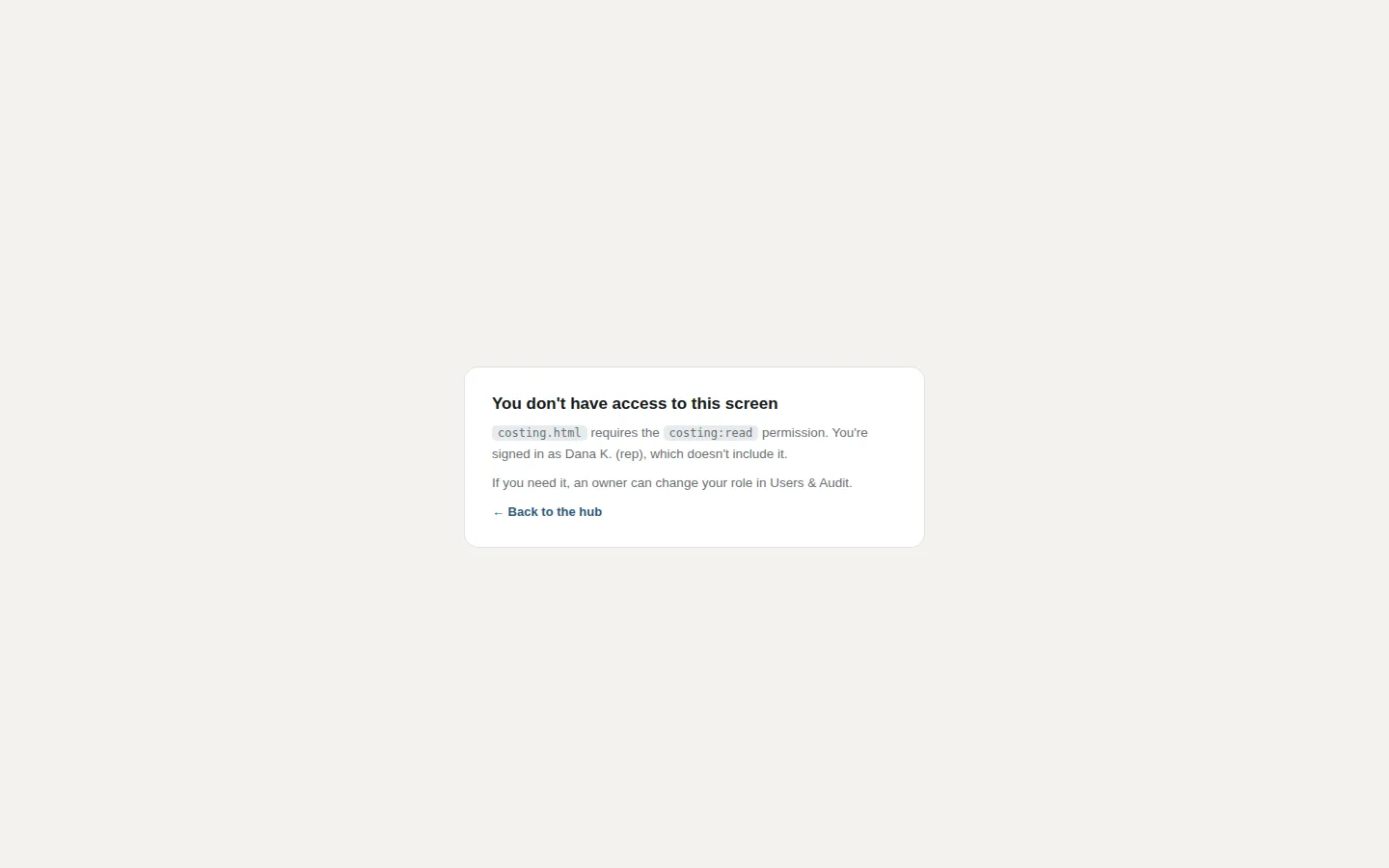
- Five roles and 43 permissions. Reps never receive margin — the server strips it, so it isn't in the page for anyone to find.
- An audit log that records refusals, not just actions: "who tried to see margin" is the more useful question.
- Internal messaging where the job has its own room, and a cost figure can't be posted into a room full of people who can't see cost.
- A daily brief that says what changed and why a number moved.
Reading about it is the slow way.
The demo walks the same six systems as real screens, in the order they happen on a job.